Thursday, January 27, 2022

Despite an Impressive Managerial Career and Missing Hall of Fame Election by a Single Check Mark, Lou Piniella Faces a Tough Road to be Voted into Cooperstown on a Future Ballot


In 2003, the Hall of Fame began releasing voting percentages for the Veterans and Era Committee elections.  Since that time, seven candidates—Dick Allen, John Fetzer, Marvin Miller, Tony Oliva, Lou Piniella, Allie Reynolds, and Ted Simmons have each missed gaining entry into Cooperstown by a single vote.  Of those seven candidates, Miller, Oliva, and Simmons were elected on a later ballot while the remaining four candidates still sit outside of the Hall of Fame.  The elections of Oliva and Simmons were particularly notable as they were voted in on the next ballot they were eligible to appear on after falling a single check mark shy.  With a cycle of elections for the Early Baseball and Golden Days timeframes recently completed, the Today’s Game epoch will be the next focus of the Era Committee when the voting body convenes later this year.  On the previous Today’s Game Era election, Piniella fell one tally short of being voted in.  Piniella’s near miss at Cooperstown immortality was overshadowed by the controversial election of Harold Baines who collected the exact 75% required for election by the Today’s Game Era Committee.  After coming so close to election, Piniella will undoubtedly be included on December’s Today’s Game Era ballot.  Like Oliva and Simmons, Piniella could have some momentum due to coming a single vote away on the previous Today’s Game Era ballot.  However, Piniella may have missed his best chance at being elected as he faces a tough road to Cooperstown with a solid slate of candidates set to become eligible for December’s Today’s Game Era ballot.  Nevertheless, Piniella’s long and distinguished managerial career gives the former skipper a strong Hall of Fame case that is worthy of a long look from Era Committee voters.

Prior to taking the managerial reigns, Piniella had a fine playing career that spanned parts of 18 seasons.  Piniella won the 1969 AL Rookie of the Year as a member of the expansion Kansas City Royals but spent the majority of his career with the New York Yankees.  Piniella primarily played left field and was a part of four pennant winners and captured two World Series rings as a member of the Yankees.  Nicknamed “Sweet Lou” to describe his swing, the moniker proved to be somewhat paradoxical for him as he was known for his fiery temperament that occasionally resulted in the slugger destroying water coolers, batting helmets, and other inanimate objects.  However, Piniella’s competitiveness and drive to win endeared him to teammates.  Yankees second baseman Willie Randolph said of Piniella, “He was one of the most fiery and competitive players you'd ever want to be with.  He was a total team player and his attitude and will to win rubbed off on a team.”
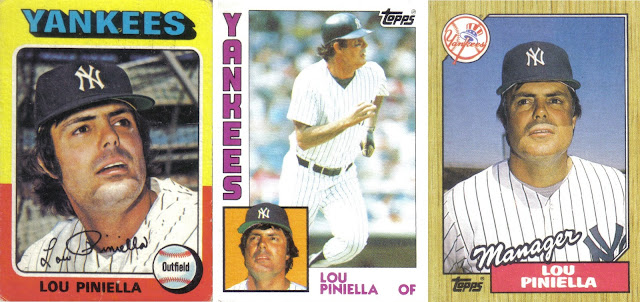
As his playing career was winding down, Piniella joined the Yankees coaching staff.  In 1986, at age 42 and less than two years removed from taking his final at bat, Piniella replaced his former manager Billy Martin as the Yankees skipper.  Piniella took over a Bronx Bombers team that had finished second in the AL East during the prior year, having been narrowly edged out for the division title by the Toronto Blue Jays despite winning 97 games.  Under Piniella, New York repeated as AL East runner-up with a 90-72 record in 1986.  The following season, Pinella steered the Yankees to a similar 89-73 mark but slid back to fourth place in the division.  At the conclusion of the 1987 campaign, Yankees owner George Steinbrenner moved Piniella to the front office to serve as the club’s general manager and brought Martin back to skipper the team for a fifth time.  Piniella soon became unhappy with the confinement of the office job which took him away from the field and, in late May 1988, stepped down as general manager and moved into a scouting and player evaluation role.  Yet, less than a month later, Piniella found himself back at the manager’s helm when Billy Martin was fired on June 23.  Martin had once again worn out his welcome with the Yankees as his mishandling of the pitching staff, clashes with the front office and all too familiar off-the-field controversies once again culminated in the volatile manager’s dismissal.  Piniella inherited a second place Yankees team that was just two and half games out of the AL East lead with a 40-28 record but was coming off an abysmal stretch in which the club had lost six of its last seven games.  Piniella was unable to right the ship as the Bronx Bombers went 45-48 following the managerial change to finish the season at 85-76, in fifth place, three and a half games behind the division champion Boston Red Sox.  At the conclusion of the campaign, Piniella was relieved of his manager duties and replaced by Dallas Green.  Still under a personal services contract to the Yankees, Piniella was moved into a broadcasting role by the organization.  New York’s AL East rival Toronto attempted to hire Piniella after firing manager Jimy Williams early in the 1989 season but was blocked by Steinbrenner when the two teams were unable to agree on which player to send to the Yankees as compensation for letting Piniella out of his contact.  However, a few months later, Piniella permanently left Steinbrenner’s managerial circus when the controversial owner let him out of the final year of his personal services contract to manage the Cincinnati Reds for 1990.

Piniella assumed leadership of a Reds club which had finished second place four consecutive seasons, from 1985 to 1988, under the direction of franchise icon Pete Rose.  Most recently though, the Reds had slumped to a 75-87 record during the tumultuous 1989 campaign in which Rose was banned from baseball for gambling.  In Piniella’s first year as Cincinnati’s skipper, the Reds not only rebounded but finally got over the hump—leading the division from the first day of the season onward and taking the NL West crown with a 91-71 record.  After defeating the Pittsburgh Pirates in the NLCS, Cincinnati faced the 103-win defending World Series champion Oakland Athletics in the Fall Classic.  Piniella and the Reds shocked the baseball world by not only defeating the heavily-favored A’s but sweeping them in the process.  The Reds experienced a post-championship malaise in 1991, sliding back to a 74-88 mark.  The club re-emerged the following season, nearly matching their 1990 record with a 90-72 finish.  However, Cincinnati’s 90 wins were not enough to capture the NL West as the team finished eight games behind the Atlanta Braves.  Despite winning a championship and producing a second-place finish in his three years at the Reds’ helm, in a surprising move, Piniella rejected Cincinnati’s contract extension and left the franchise to become manager of the Seattle Mariners.

Piniella had always been known as an intense competitor during his playing career and further solidified this reputation as a manager.  Piniella’s animated, often amusing tirades directed at umpires became legendary as the sight of the quick-tempered skipper storming out of the dugout to argue with officials, tossing and kicking his cap, dislodging and throwing bases, and kicking dirt on both home plate as well as on the men in blue all provided fodder for highlight and blooper reels.  However, Piniella’s temper led to a couple of infamous incidents during his tenure with Cincinnati.  Late in the 1992 season, Piniella engaged in a locker room wrestling match with closer Rob Dibble that was witnessed by reporters and recorded by television cameras.  Despite the tussle, the two combatants patched things up the next day with Piniella even putting his arm around Dibble and kiddingly throwing fake punches at Dibble’s stomach after the hurler closed out the game and earned the save.  The fracas proved to be an isolated incident as Piniella was generally well-liked by his players—even Dibble.  "We butted heads once.  It's way more famous than it should be.  We've been family ever since,” Dibble reflected years later.  “During batting practice every day, Lou would go to every guy just to see how you were doing—not as a player, but as a person.  I'll always respect him for that.  I always thought that was one of the best qualities about him, that he always cared about you as a person first, a baseball player second."

While the Piniella/Dibble locker room battle will forever live on as part of the fiery manager’s highlight reel of outbursts, an incident the previous year had a much more lasting impact on Piniella’s tenure with the Reds.  During a 7-4 loss on August 3, 1991, Piniella was ejected from the game after home plate umpire Gary Darling overruled Dutch Rennert’s call of a home run by Cincinnati second baseman Bill Doran, saying the ball was foul.  Piniella criticized Darling after the game, stating: “I honestly feel that Darling has a bias against us and won’t give us a call all year.  It’s time he gets his act together now.  We have more complaints against him than against any other umpire.”  A few days later, Darling and the Major League Umpires Association filed a $5 million lawsuit against Piniella, contending that the Reds manager “severely damaged” his reputation.  Piniella found himself forced to pay for legal services as the notoriously cheap Reds owner Marge Schott refused to assist with the lawsuit.  Ultimately, an out of court settlement was reached during the offseason.  Nevertheless, the lack of support Piniella received from Schott resonated with the skipper and played a key role in his decision to leave Cincinnati when his contract expired after the 1992 campaign.  “When I got sued by the umpires, I got no backing from the organization,” Piniella explained.  “That started the wheels turning.  I think any organization would back their manager.  I got nothing, financial or anything.  I went back in '92 and fulfilled my contract, but when it came time to extend, I chose not to."

Unlike the Yankees and Reds, the Mariners club Piniella took over in 1993 had no real track record of success as a franchise.  In fact, the Mariners had just one winning season—an 83-79 campaign in 1991—in their 16-year existence and were coming off a disastrous 64-98 record.  Seattle’s roster featured a young nucleus of future Hall of Famers in Ken Griffey Jr., Edgar Martinez, and Randy Johnson who had been teammates since 1989 yet had achieved little success together.  Intent on changing the losing culture that existed within the Mariners franchise, Piniella brought the club back above .500—going 82-80 during his initial season at the helm.  Just three years into his tenure with Seattle, Piniella led the club to its first postseason, winning the AL West in a one-game tiebreaker against the California Angels to advance to the ALDS, where the fiery manager faced his old team, the Yankees.  After dropping the first two games on the road in New York, the Mariners roared back to win the final three games—the third in dramatic fashion with Edgar Martinez’s bottom of the eleventh inning double driving in Ken Griffey Jr. to score the Series-ending run.  Seattle subsequently fell in six games to the 100-win Cleveland Indians in the ALCS.  Nevertheless, with their division title and ensuing playoff run, the 1995 Mariners are often credited with saving baseball in Seattle.  Piniella drew praise for leading the franchise to its first postseason and was named AL Manager of the Year.

Piniella and Seattle won their second AL West crown in 1997 but were defeated by the Baltimore Orioles in the ALDS.  Piniella then watched as the Mariners lost three of its core players in successive years as staff ace Randy Johnson was dealt to the Houston Astros in July 1998, Ken Griffey Jr. was traded to the Cincinnati Reds at the conclusion of the 1999 season, and young phenom Alex Rodriguez left to sign a record-setting free agent contract with the Texas Rangers following the 2000 campaign.  Despite losing these key players, Piniella was able to weather the storm and lead the Mariners to the playoffs as the AL Wild Card in 2000 and AL West champions in 2001.  Seattle’s 2001 campaign was particularly impressive as the team put together a dominant 116-46 mark—easily capturing the division title and tying the record set by the 1906 Chicago Cubs for most wins in a season.  However, the Mariners were unable to capture the pennant as the club was defeated in the ALCS in both 2000 and 2001 by the playoff-tested Yankees who were in the midst of an incredible run which saw the Bronx Bombers win five pennants and four World Series championships between 1996 and 2001.  Nevertheless, Piniella was once again recognized for his leadership abilities as the fiery skipper picked up his second AL Manager of the Year Award in 2001.  Piniella and the Mariners just missed the playoffs in 2002 despite winning 93 games.

However, after a series of family events, including a 2002 car accident involving his daughter and granddaughter, Piniella expressed a desire to manage a team closer to his West Tampa home for the 2003 season.  Seattle agreed to let Piniella out of the final year of his contract to manage his hometown team, the Tampa Bay Devil Rays, after the two clubs worked out a deal which sent Piniella and prospect Antonio Pérez to the Devil Rays in exchange for one of Tampa Bay’s best players, center fielder Randy Winn.  In ten seasons with Seattle, Piniella posted an excellent 840-711 record and played a key role in helping the Mariners evolve from a struggling franchise that regularly finished towards the bottom of the division into a perennial contender.  Since the departure of Piniella, Seattle has been unable to return to the postseason and currently has the dubious distinction of having the longest playoff drought, not only in MLB but, among the four major North American team sports.  Thus, the Mariners’ quartet of postseason appearances under Piniella are the only ones in the 45-year history of the franchise.

With his move to Tampa Bay, Piniella, for the second time in his career, assumed control of a team with no history of winning as the Devil Rays had finished last in the AL East during each of the franchise’s five seasons in existence—the most recent of which was a 106-loss campaign.  In Piniella’s first season at the helm, Tampa Bay made a modest improvement, increasing from 55 to 63 wins.  The following year, Piniella led the Devil Rays to a franchise-best 70-91 record and their first finish outside of the AL East cellar.  However, when new ownership bought into the Devil Rays during the 2004 season, the franchise decided to build for the future rather than improve the current team.  As Tampa Bay took a step back and struggled in 2005, Piniella became fed up with the mounting losses and the lack of commitment from ownership to increase the club’s payroll—which was by far the lowest in the major leagues.  Tampa Bay went 67-95 in 2005 and slid back into the AL East cellar.  At the end of the season, Piniella and the Devil Rays decided to mutually part ways with the team buying out the final year of the veteran skipper’s contract.
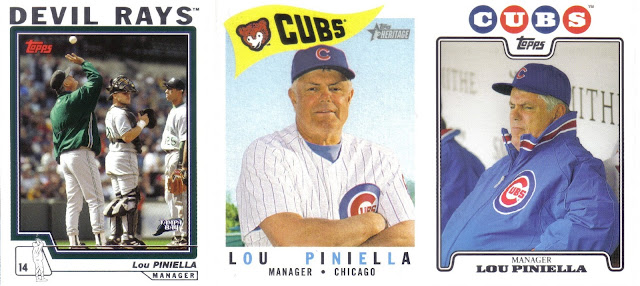
After sitting out the 2006 campaign, Piniella returned to the managerial ranks when he signed with the Chicago Cubs for 2007.  In his first year on the Northside, Piniella improved the club from 66-96 to 85-77 and won the NL Central.  Although the Cubs were swept by the Arizona Diamondbacks in the NLDS, Piniella proved he was still capable of leading his team to the playoffs.  The following season, Piniella joined Tony La Russa, Bobby Cox, and Jim Leyland as the fourth skipper to be named Manager of the Year in both leagues when he was bestowed the honor after piloting the Cubs to an NL-best 97-64 record.  Despite their excellent regular season, Piniella and Chicago were once again swept in the NLDS, this time by the Los Angeles Dodgers.  Even though the 2008 campaign ended with another quick playoff exit, it marked the first time since 1908 that the Cubs had made the postseason in consecutive years.  After sliding back to 83-78 in 2009, the club struggled in 2010.  With Piniella in the final year of his contract, the 66-year old skipper announced in July that he intended to retire at the conclusion of the season.  However, on August 22—with the Cubs well out of the NL Central and wild-card races—Piniella decided to step down as manager to go home to care for his ailing mother.

Piniella finished his managerial career with an overall record of 1835-1713.  The longtime skipper’s lofty win total ranks 16th all-time and places him ahead of several Hall of Fame managers including Tom Lasorda, Dick Williams, Earl Weaver, and Whitey Herzog—each of whom were still piloting teams when Piniella made his managerial debut.  Moreover, only three non-Hall of Fame managers—Bruce Bochy, Gene Mauch, and Dusty Baker—have a higher career win total than Piniella.  In addition to his impressive victory mark, Piniella is one of eight skippers to be named Manager of the Year three or more times.  The crowning accomplishments of Piniella’s career were leading an underdog Reds team to a shocking sweep over the heavily-favored A’s and transforming the woefully uncompetitive Mariners franchise into a consistent winner.  What’s more, Piniella guided three different franchises to the postseason and engineered eight 90-win campaigns spread across four organizations.  The only managerial stop in which Piniella failed to find any measure of success was Tampa Bay where he found little support from ownership.  If Piniella’s three difficult seasons with the Devil Rays are omitted from his ledger, his career record would be 1635-1428 and improve his win-loss percentage from .517 to a more illustrious .534.

However, Piniella was a contemporary of Tony La Russa, Bobby Cox, and Joe Torre—the respective second, fourth, and fifth-winningest managers of all-time and in many ways his career suffers in comparison to those three legendary skippers.  Piniella also had the misfortune of becoming eligible for the Hall of Fame at the same time as La Russa, Cox, and Torre.  As a result, Piniella was not included on the December 2013 Expansion Era ballot in which La Russa, Cox, and Torre were unanimously voted into Cooperstown.  Three years later, Piniella was selected to appear on the Today’s Game Era ballot.  With La Russa, Cox, and Torre each already elected, Piniella shared the ballot with just one other manager, Davey Johnson.  Like Piniella, Johnson had a World Series championship to his credit, having led the 1986 New York Mets to a memorable Fall Classic victory over the Boston Red Sox.  Johnson held a significant edge in career win percentage over Piniella—.562 to .517—though Johnson’s superior mark came in just 2,445 games managed, more than 1,000 fewer than Piniella’s 3,548 total.  Piniella picked up 7 of 16 tallies for 43.8% of the vote, the third highest drawing candidate—trailing former executive John Schuerholz and former commissioner Bud Selig who were easily elected with 100% and 93.8% of the vote, respectively.  It appeared the electorate had valued the sum of Piniella’s lengthy career over Johnson’s higher win percentage as his managerial peer was listed among the remaining seven candidates as having received fewer than five votes.

Piniella returned to the ballot when the Today’s Game Era Committee convened for their second election in December 2018.  Once again, Piniella was joined on the ballot by Davey Johnson along with a second manager candidate, Charlie Manuel.  Similar to Johnson, Manuel had a better career win percentage than Piniella while equaling his one World Series championship.  However, Manuel managed just 1,826 games—barely half of Piniella’s total.  As the highest drawing holdover from the December 2016 Today’s Game Era ballot, Piniella seemed to have the advantage over the other returning candidates.  Moreover, with John Schuerholz and Bud Selig—the two top vote getters from the December 2016 ballot—elected and no longer on the ballot along with Lee Smith being the only newly eligible candidate with strong BBWAA support, Piniella appeared poised for at the very least an increase in support.  In the ensuing election, Piniella picked up 11 votes leaving him just one tally shy of Cooperstown.  Piniella once again drew the third highest total, finishing behind the unanimously elected Lee Smith and one check mark behind the controversially elected Harold Baines who garnered exactly 75%.  Piniella easily outpaced his managerial peers, Johnson and Manuel, who were among the seven candidates listed as having received fewer than five votes.
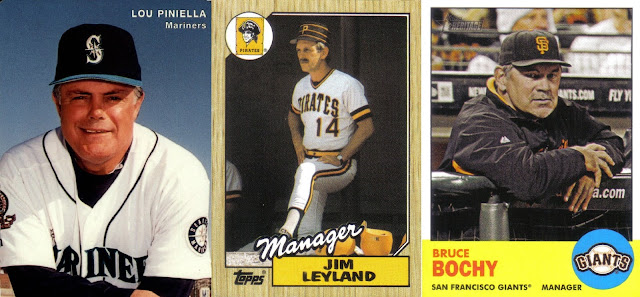

After falling a single vote shy of Cooperstown, Piniella will undoubtedly be included on the ballot when the Today’s Game Era Committee meets again this fall.  However, Piniella may have missed his best chance at election as the next Today’s Game Era ballot could potentially include a couple of impressive new manager candidates, Bruce Bochy and Jim Leyland, who will both eligible for the ballot.  With three World Series championships, four pennants, and 2,003 victories on his Hall of Fame résumé, Bochy should not only supplant Piniella as the top drawing manager candidate but will almost certainly be elected by the Today’s Game Era Committee the first time he appears on the ballot.  Leyland could also meet or exceed Piniella’s support as his Hall of Fame credentials rival the Tampa-born skipper’s.  Leyland and Piniella each have three Manager of the Year Awards to their name.  Leyland trails Piniella in both victories—1,835 to 1,769—and winning percentage—.517 to .506.  Nevertheless, Leyland was able to capture three pennants to Piniella’s one while matching his World Series triumph by taking the Florida Marlins all the way in 1997.  Leyland was technically eligible to be included on the previous Today’s Game Era ballot but was curiously excluded.  Leyland retired from managing following the 2013 season but returned to the dugout to lead Team USA to the 2017 World Baseball Classic championship.  Perhaps the Historical Overview Committee, which screens and selects the candidates for the Era Committee ballots, felt that by taking the helm of Team USA, Leyland could possibly come out of retirement and manage a major league team again.  Bochy had planned to return to the dugout to manage Team France in the 2021 World Baseball Classic but with that event now postponed indefinitely, there is no telling how or if that will affect Bochy’s eligibility.  In addition, Bochy’s name still periodically pops up for managerial openings and the former skipper himself has not completely ruled out returning to the dugout one day.

Along with the possible additions of Bochy and Leyland, controversial player candidates Barry Bonds, Roger Clemens, Curt Schilling, and Sammy Sosa who recently aged off the BBWAA ballot will each be eligible for the first time.  The similarly controversial Rafael Palmeiro is newly eligible as are impressive player candidates Fred McGriff, Bernie Williams, and Kenny Lofton.  Unfortunately for Piniella, this influx of fresh candidates may stall any momentum the former skipper brings as the top returning holdover from the previous election and could potentially create a crowded ballot and backlog similar to the one that affected the BBWAA vote for a number of years.  Bonds, Clemens, Schilling, and Sosa were not initially slated to be eligible on the upcoming ballot, however, when the Golden Days and Early Baseball Era Committee ballot elections were canceled in 2020 and pushed back a year, these four candidates, along with Lofton, each became eligible.  In addition, depending on how the next few BBWAA ballots play out, Gary Sheffield and Jeff Kent could both potentially be eligible for the December 2024 Today’s Game Era ballot.  Also, by this point, a prominent front office figure or another manager such as Dusty Baker or Terry Francona could have retired and become eligible which would further crowd the ballot.

With so many prominent candidates set to hit the Today’s Game Era ballot over the next two elections, Piniella faces a tough road to be voted into Cooperstown.  But, regardless of how many impressive new candidates become eligible, Piniella put together a solid managerial career and has a strong enough Hall of Fame case that he will continue to remain a relevant candidate on future Today’s Game Era ballots.

----by John Tuberty 

Follow me on Twitter @BloggerTubbs

Stat links to main players mentioned: Lou Piniella, Dick Allen, Tony Oliva, Ted Simmons, Pete Rose, Ken Griffey Jr., Edgar Martinez, Alex Rodriguez, Barry Bonds, Roger Clemens, Sammy Sosa, Curt Schilling, Gary Sheffield, Randy Johnson, Fred McGriff, Jeff Kent, Bernie Williams, Kenny Lofton, Allie Reynolds, Lee Smith, Harold Baines, Terry Francona, Dusty Baker, Bruce Bochy, Jim Leyland, Rob Dibble

Sources: Baseball Reference, New York Times articles~March 1974, May 1988, June 1988, June 1988, May 1989, August 1991, September 1992, February 1993, Los Angeles Times June 1988, Los Angeles Times August 1991, Chicago Tribune, Deseret News, Seattle Post-Intelligencer December 2001, Seattle Post-Intelligencer October 2002, Tampa Bay Times September 1992, Sports Illustrated Vault March 2001, Sports Illustrated Vault March 2003, ESPN October 2002, ESPN June 2005, ESPN September 2005, ESPN July 2010, The Spokesman-Review, The Columbus Dispatch, Baltimore Sun, Sportico

Cards: Lou Piniella 1988 Topps, 1990 Kahn's, 2002 Keebler, 1975 Topps, 1984 Topps, 1987 Topps, 1990 Topps Traded, 1991 Topps, 1992 Topps, 1993 Mother's Cookies, 1994 Mother's Cookies, 2001 Keebler, 2004 Topps, 2009 Topps Heritage, 2008 Topps, 1996 Mother's Cookies; Jim Leyland 1987 Topps, Bruce Bochy 2012 Topps Heritage

Other Articles by Tubbs Baseball Blog:

My Three Favorite Baseball Cards and Thoughts on the Hall of Fame Case of Thurman Munson

My Three Favorite Baseball Cards and Thoughts on the Hall of Fame Case of Mainstay Era Committee Ballot Candidate Tommy John

How Dwight Evans Overcame a Mid-Career Crisis to Evolve into a Hall of Fame-Caliber Player


Monday, December 20, 2021

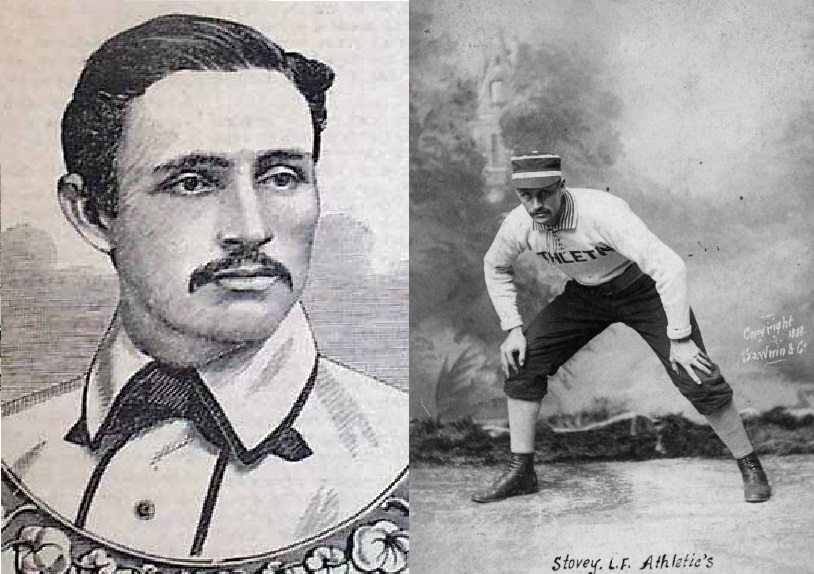
Nineteenth Century Slugger Harry Stovey's Hall of Fame-Worthy Career

Nineteenth century slugger Harry Stovey was one of the greatest players during the early days of baseball.  Stovey played the bulk of his major league career in the American Association, which was a rival league to the National League.  Stovey dominated the game with power and speed and was arguably the finest player in the American Association's ten-year history.  Stovey's career may have ended more than a century ago but his significant accomplishments make him worthy of election to the Baseball Hall of Fame.

Stovey was born Harold Duffield Stowe in Philadelphia on December 20, 1856.  Stowe began playing baseball at a young age and developed a passion for the game.  However, Stowe's mother was not fond of the sport so at age 20, he changed his last name to Stovey to keep her from learning that he had embarked on a career as a professional baseball player.  After spending three years playing for minor league clubs, Stovey made his major league debut in 1880 with the Worcester Ruby Legs during the team's inaugural season in the National League.  Stovey made an immediate impact during his rookie campaign, leading the NL in home runs, triples, and extra-base hits while also finishing runner-up in runs scored and total bases.  Stovey's league-pacing total of six round-trippers is low by today's standards but at the time home runs were an extremely rare occurrence because the baseball itself was softer and ball fields of the day were vast.  In addition, teams only played around an 85-game schedule.  Moreover, Stovey's six home runs represented nearly a tenth of the 62 longballs hit in the NL that year and his one-man total was higher than the team totals of three of the eight NL clubs.  On defense, Stovey split his time between first base and outfield. Stolen base records were not kept for the first six years of Stovey's career but his speed not only made him a constant threat to swipe a bag but also enabled him to hit inside-the-park home runs, take extra bases on would-be singles, and make the opposition pay for errors and wild pitches.

Following the 1882 season, the Worcester Ruby Legs disbanded and Stovey was quickly signed by the Philadelphia Athletics of the American Association, 
which had just completed its first year of operation as a direct competitor to the National League.  Stovey took the AA by storm, pacing his new league in several categories, including runs scored, doubles, slugging percentage, and total bases--in addition to setting the major league record for home runs with 14.  The young power-hitter once again towered over the league in longballs with his round-tripper total making up nearly an eighth of the 114 homers hit in the AA and equaling or bettering five of the eight AA clubs in four-baggers.  Stovey led the Athletics to a first place finish in a close race over the St. Louis Browns with the speedster even scoring the go-ahead run against the Louisville Eclipse in the pennant-clinching game.  What's more, Stovey accomplished all this despite battling serious ankle injuries during the latter part of the season.      

Stovey was arguably the greatest player in the history of the American Association
 
After leading the Athletics to the pennant, Stovey continued to dominate the AA with a series of strong campaigns.  Stovey's potent power and electric speed continued to be hallmarks of his game.  As the AA proved to be a formidable competitor to NL, the two leagues expanded their schedules from just under 100 games in 1883 to nearly 140 by the end of the decade.  In his first few seasons with Philadelphia, Stovey saw most of his time at first base before being used more regularly in one of the three outfield positions.  In 1886, the AA and NL both started keeping stolen base records.  During this time, the definition of what constituted a stolen base was more liberal than what it is today.  Nevertheless, the documenting of stolen base records showcased the speed part of Stovey's game and he is recognized as the AA's initial leader in swiped bags with 68 in 1886.  Three seasons later, Stovey paced the AA and set personal bests with 19 home runs and 119 RBIs.  Stovey's excellent 1889 campaign proved to be his last with Philadelphia as the fleet-footed slugger joined the Boston Reds of the Players League--a rival league that the Brotherhood of Professional Baseball Players formed because they were fed up with the reserve clause which bound a player to one club in perpetuity and kept salaries low.  Many of the AA's and NL's top players jumped to the Players League.  Stovey remained a standout talent in his new league--leading the PL with 97 stolen bases and ranking third with 12 home runs.  Stovey's stellar year helped Boston win the Players League's only pennant as the new league folded after one season.

With the folding of the Players League, Stovey's rights as a player laid with the Philadelphia Athletics in the American Association.  However, in an apparent oversight, the Athletics had failed to include Stovey on their reserve list--unintentionally making him a free agent of sorts.  Stovey opted to stay in Boston to play for the Beaneaters of the NL.  Now a 34-year old veteran, Stovey proved he could still dominate at the plate as well as on the basepaths--leading the NL in a slew of categories including home runs, triples, and extra-base hits while also stealing 57 bases--good for fifth highest in the league.  Stovey's potent bat and quick feet proved key to the Beaneaters who captured the NL flag--giving the veteran the unique accomplishment of having won three pennants in three different leagues.

Stovey got off to an uncharacteristically poor start the following season and, with the Beaneaters looking to cut their payroll, the veteran was released in June.  Stovey was signed by the Baltimore Orioles a couple of weeks later.  Perhaps the time off helped Stovey, as the slugger rebounded in Baltimore, posting a 140 OPS+ over the balance of the season.  However, Stovey struggled to start the 1893 campaign.  After seeing a drop in his playing time, he asked for and was granted his release from Baltimore in late May.  Stovey then caught on with the Brooklyn Grooms in what would ultimately be his final year playing major league baseball.  Stovey played professionally in 1894 for former teammate King Kelly's Allentown club and later that season as player-manager for a team in New Bedford, Massachusetts--the same town where the slugger had met his wife, Mary, while playing for the city's minor league club in 1879.  Stovey joined the New Bedford Police in 1895 and made news again in 1901 when he jumped into the water to save a 7-year old boy from drowning while patrolling the waterfront.  Stovey was named Police Chief in 1915, a position he held until he retired in 1923.  Stovey passed away at age 80 in 1937.

At the time of his retirement from major league baseball, Stovey was the career leader in home runs.  Stovey initially set the career home run record while still active in 1885, then was briefly passed by Dan Brouthers in 1887, before recapturing the top career mark during his stellar 1889 campaign.  Stovey's final career total of 122 was ultimately overtaken in 1895 by Roger Connor, who retired with 138 round-trippers.  Despite playing during an era of 85 to 140-game schedules, Stovey still ranked fourth in career home runs in 1921 when Connor was finally surpassed for the career longball mark by Babe Ruth.  Stovey's speed played a key role in his ability to hit home runs as 27 of his 122 round-trippers were of the inside-the-park variety.  Not surprisingly, Stovey retired as the career leader for inside-the-park home runs and more than a century since his final game, still ranks tied for 15th all-time.

Stovey retired as the career home run leader
 
In addition to setting the career home run and inside-the-park home run records, Stovey's 509 swiped bags placed him second only to Arlie Latham in career stolen bases when he played his final major league game in 1893.  While Stovey's stolen base totals may be incomplete due to the statistic not being recorded until his seventh major league season, the speed aspect of his game is also highlighted by his ability to hit triples and produce incredible runs scored totals--two categories in which the fleet-footed slugger ranked number three all-time when he hung up his spikes.  Because the baseball itself was softer and the playing fields were vast, triples were much more common than home runs during the nineteenth century.  Stovey smacked 176 triples during his career and with 1,495 runs scored in just 1,489 games, Stovey holds the unique distinction of being one of only three players--along with Billy Hamilton and George Gore--to play more than 600 games and finish their career with more runs scored than games played.  The speed and aggressiveness with which Stovey took to the basepaths were undoubtedly key factors in how he was able to amass such amazing triples and runs scored totals.  During the era in which Stovey played, baseball equipment was archaic compared to what is used today so fielding errors were much more common.  Errors themselves were tracked but many other important details such as reached on errors, extra bases taken from errors, stolen bases, and wild pitches were unrecorded during much or all of Stovey's career.  His quickness and daring put pressure on opposing defenses, causing them to make errors and pay significantly for them.

Stovey is also notable for being recognized as either the inventor--or at the very least an early adopter--of base running advancements such as sliding into bases feet first, wearing sliding pads to combat injuries, and using the pop up slide to better position himself for advancing to the next base.  Stovey played during an era plagued by poor sportsmanship.  That said, despite his propensity for sliding into bases feet first, Stovey was recognized as one of the game's cleanest players, earning him the nickname "Gentleman Harry."  Alfred Henry Spink, author of the book The National Game, wrote this of Stovey in 1910: "He always slid feet first but was not "nasty" with his feet in the way of trying to hurt the baseman, as some of his imitators were."

On the defensive side of the diamond, Stovey played the bulk of his games in the outfield but also saw his share of action at first base.  
During Stovey's era, first base was considered a much more challenging position on defense than it is today.  Overall for his career, Stovey played 550 games at first base and 947 in the outfield with 519 of those in left field, 251 in right, and 176 in center.  In 1888, Stovey showcased his arm strength in a distance-throwing contest held by The Cincinnati Enquirer, finishing second to only Ned Williamson with a mark of 369 feet, 2 inches.
 
Despite holding the career home run record for several seasons and regularly leading his respective league in several important categories, Stovey has yet to be honored with a bronze Hall of Fame plaque in Cooperstown.  Stovey was arguably the greatest player in the ten-year history of the American Association--ranking as the defunct league's all-time leader in position player WAR, home runs, extra-base hits, and runs scored even though he only spent seven seasons in the AA.  However, having played a significant portion of his career in the AA has likely hindered Stovey's Hall of Fame case since the league is widely viewed as inferior to the NL.  Fifty-six percent of Stovey's career plate appearances took place in the AA.  Thus far, the only players in the Hall of Fame who have anywhere near that high a percentage of their career plate appearances in the AA are Tommy McCarthy and Bid McPhee, who each had just over two-fifths of their turns at the plate come in the defunct league.  McCarthy was voted into Cooperstown by the Old Timers Committee in 1946 as a player but was largely elected due to the innovative strategies he devised such as the hit-and-run.  McPhee's career is less associated with the AA since the Cincinnati Reds franchise where he spent the entirety of his career joined the NL when the AA dissolved and also because his years in the senior circuit came during the high offense 1890s.  Although McPhee made it into the Hall of Fame, his time in the AA may have delayed his election to Cooperstown, which finally came by way of the Veterans Committee in 2000--more than a century after he played his last major league game.  Perhaps because the AA folded after ten seasons while its direct competitor the NL survived and continues to thrive, the accomplishments of its players have been discounted by Hall of Fame voters.

Another factor that has likely hurt Stovey's Hall of Fame case is that his career took place during an era with shorter schedules.  Stovey spent the majority of the first half of his career only playing between 83 to 113-game schedules before the ledger finally expanded to around 140 games at the outset of his seventh season.  The timing of Stovey's career also worked against his Hall of Fame case as during his final major league campaign the pitching distance was moved from 55 feet to 60 feet 6 inches.  This change resulted in a significant increase in scoring that--along with playing their career under longer schedules--helped strengthen the Hall of Fame cases of hitters who played their prime years in the 1890s and made sluggers from Stovey's era look weaker by comparison.
 
 
Stovey holds the unique distinction of winning pennants in three different leagues
 
Nevertheless, Stovey's dominance as player is underscored by the frequency in which he led his respective league in a variety of important categories:  Stovey was a five-time leader in home runs and extra-base hits.  He stood atop the league leader chart in triples and runs scored on four occasions.  He also ranked first in total bases and slugging percentage three times.  Although stolen base totals were only recorded for the final eight seasons of Stovey's 14-year career, the daring speedster twice paced the circuit in swiped bags.  Stovey also led the league in doubles and RBI on one occasion each.  In addition to establishing the record for career home runs, he also set single-season records for home runs, extra-base hits, triples, and stolen bases.  Stovey's dominance was not limited to just his time in the American Association as the fleet-footed power-hitter led the National League in home runs and triples on two occasions and also paced the senior circuit in total bases and slugging percentage one time each--all despite spending only the first three and the final three years of his career in the NL.  Moreover, Stovey was the most prolific base stealer in the Players League's single year of existence.

Stovey's dominance is further showcased by the Black Ink Test metric designed by sabermetrician Bill James which measures how often a player led their respective league in important offensive categories.  Stovey ranks 28th all-time in position player career Black Ink--ahead of countless Hall of Famers and trailing only four players--Barry Bonds, Alex Rodriguez, Pete Rose, and Ross Barnes--who have yet to be enshrined in Cooperstown.  
Stovey's career also looks strong through another James metric, the Gray Ink Test, which measures how often a player finished in their league's top ten in important categories.  Stovey is tied for 46th all-time among position players in Gray Ink, once again ahead of scores of enshrined players, with Bonds, Rose, Albert Pujols, and Miguel Cabrera as the only non-Hall of Famers in front of him.
 
Stovey's career value is highlighted by two of today's more popular advanced metrics, WAR and OPS+.  Although Stovey's 45.0 WAR looks modest by contemporary standards, his career total was accumulated in just 6,848 plate appearances due to playing in an era with shorter schedules.  To put Stovey's WAR in better perspective, the speedy slugger averaged an impressive 4.9 WAR per 162 games during his career.  In addition, Stovey finished his career with an excellent 144 OPS+.  Only 34 position players have retired with more plate appearances and produced a career OPS+ equal to or greater than Stovey’s.  Of those 34 position players, just five--Barry Bonds, Mark McGwire, Dick Allen, Manny Ramirez, and Lance Berkman--have yet to be elected to the Hall of Fame.  Bonds, McGwire, and Ramirez undoubtedly would have been voted into Cooperstown had it not been for their ties to PEDs, while Allen seems destined for eventual enshrinement, having come a single tally shy of election in his two most recent appearances on Era Committee ballots.  Moreover, the only active position players who currently exceed Stovey in both plate appearances and OPS+ are Joey Votto, Miguel Cabrera, and Albert Pujols, each of whom have won at least one MVP award and will likely be first-ballot Hall of Famers when they become eligible.
 
Stovey’s Hall of Fame case has long been championed by writers and historians familiar with nineteenth century baseball.  In 2011, the Society for American Baseball Research selected Stovey as its Overlooked 19th Century Baseball Legend.  Stovey made his most recent appearance on a Hall of Fame ballot in December 2015 when he was included on the Pre-Integration Era ballot which considered candidates who made their greatest contributions to the sport prior to Jackie Robinson's breaking of baseball's color line in 1947.  Stovey drew 50% of the vote, coming four tallies shy of gaining the 75% required for election from the 16-member panel.  Stovey tied fellow nineteenth century slugger Bill Dahlen for the second-highest vote total among the ten candidates on the ballot, trailing only nineteenth century pioneer Doc Adams who came the closest to enshrinement, falling two check marks shy with 62.5% of the vote.

Stovey was next eligible for consideration by the Early Baseball Era Committee which replaced the Pre-Integration Era Committee.  Two key differences between the Pre-Integration Era Committee and the Early Baseball Era Committee were the timeframe cutoff was changed from 1946 to 1949 and eligibility was restored to black candidates who made their greatest contributions to the sport while participating in the Negro Leagues and pre-Negro Leagues.  The Hall of Fame had ceased considering these candidates for enshrinement after the Special Committee on the Negro Leagues elected 17 candidates in 2006.  By restoring the eligibility of the Negro Leagues and pre-Negro Leagues candidates, the Hall of Fame essentially reopened a road to Cooperstown that never should have been closed.  In December 2021, the Early Baseball Era Committee held its first election with the 16-member panel voting in a pair of worthy candidates, Buck O'Neil and Bud Fowler, who were each eligible due to the restoration of Negro Leagues and pre-Negro Leagues candidates to the ballot.  Two notable exceptions who were not selected to appear among the Early Baseball Era Committee's ten-candidate ballot were Doc Adams and Harry Stovey.  The exclusions of Adams and Stovey highlighted the difficulty of selecting candidates for the Early Baseball Era which covers, by far, the most expansive timeframe of the four Era Committees.  Moreover, unlike the Today's Game, Modern Baseball, and Golden Days Era Committees, the Early Baseball Era is tasked with considering candidates from more than just the American and National Leagues, drawing its pool from a wide variety of defunct leagues such as the American Association where Stovey spent the majority of his career or one of the Negro Leagues or pre-Negro Leagues where O'Neil and Fowler made their respective marks on the game.

Barring a restructuring of the Era Committees, the Early Baseball Era Committee is not scheduled to hold another election until December 2031.  Thus, Stovey's Hall of Fame candidacy is on hold for now.  Nevertheless, Stovey's incredible combination of power-hitting and base running gave him the ability to regularly lead his respective league in a number of important categories and dominate the game like few players have.  Stovey was one of the nineteenth century's greatest players and his outstanding career is worthy of a bronze plaque in Cooperstown and Hall of Fame immortality.

----by John Tuberty

Follow me on Twitter @BloggerTubbs


Other Articles by Tubbs Baseball Blog:


Monday, November 29, 2021

Hall of Fame Candidate Tim Hudson’s Pair of Late Season Undefeated Streaks That Played Key Roles in Securing the 2000 and 2002 AL West Division Titles for the Oakland Athletics


The majority of the focus on the upcoming Hall of Fame election will center on the final appearances of Barry Bonds, Roger Clemens, and Curt Schilling on the BBWAA ballot along with the debuts of David Ortiz and Alex Rodriguez.  One candidate who will struggle to draw the attention that his Hall of Fame case warrants is Tim Hudson.  In my previous article on Hudson, I took an in-depth look into his excellent .625 win-loss percentage and compared his career to recent Hall of Fame inductees and other prominent pitchers from his era.  For this piece, I will examine Hudson’s pair of late season undefeated streaks that played key roles in helping the Oakland Athletics rally from behind to secure the 2000 and 2002 AL West division titles.  In 2000, Hudson dominated the opposition with a microscopic 1.16 ERA and won each of his last seven starts, including the division-clinching game on the final day of the regular season.  Two years later, he made another significant impact on the playoff race by posting a stellar 8-0 mark and 1.75 ERA over his final 11 starts, which included four wins during the A’s record-breaking run of twenty consecutive victories.

Originally signed by Oakland as a 6th round draft pick in the 1997 Amateur Draft, Hudson made his major league debut for the club on June 8, 1999.  Hudson quickly established himself as one of the top young pitchers in the game, finishing his rookie campaign with a superb 11-2 record and a 3.23 ERA.  In the process, the right-hander helped the A’s complete their first winning season since 1992.  During the first half of his sophomore campaign, Hudson went 10-2 with a 4.27 ERA and earned his first All-Star selection.  After a rough patch of outings following the Midsummer Classic, Hudson entered his August 28 home start versus the Chicago White Sox with a 13-6 mark and 5.23 ERA.  However, Hudson’s ERA was deceptively high as, up until that point, his season had been feast-or-famine:  In nine of his 13 victories he had pitched seven or more innings while giving up two or fewer runs.  Conversely, in each of his six losses he had allowed more than a run per inning pitched.

Toeing the rubber against the potent White Sox offense was an unlikely place for Hudson’s undefeated streak to begin.  After all, the South Siders held a commanding lead atop the AL Central division with a league-best 77-53 record while also pacing the junior circuit with an average of 6.12 runs scored per game.  Moreover, just three weeks before in Chicago, Hudson had been chased from the mound in the third inning and taken the loss versus the White Sox.  Going into Hudson’s August 28 start, the A’s were 68-61 and locked in a three-team race for the AL West, trailing the Seattle Mariners by two and a half games and a game and a half ahead of the third place Anaheim Angels.  Oakland was also one of six clubs in a close battle for the AL Wild Card.  At this point, the Boston Red Sox led the wild card standings by a half game over the Cleveland Indians and a full game over the A’s.  Hudson was opposed by White Sox starter Jim Parque who was in the process of putting together a career year and carried a 10-5 record and 4.39 ERA into the contest.  Unlike his previous outing against Chicago, this time around Hudson dominated the White Sox offense, tossing a one-hit shutout in a 3-0 Oakland victory.  The righty only allowed two baserunners the entire game—a top of the third inning walk to Paul Konerko and a single to Frank Thomas in the fourth.  Neither White Sox baserunner advanced past first base as Konerko was forced out at second on a groundout before a strikeout closed the frame while Thomas was erased on an inning-ending double play.  Hudson struck out eight and induced 13 ground ball outs including a Ray Durham tap back to the mound to end the game.  Parque matched zeroes with Hudson through the first four innings until the A’s offense broke through with a pair of runs in the fifth before adding another run in the sixth.  Hudson’s win moved his record to 14-6 and brought his ERA back below 5.00 to 4.93.  The combination of Oakland’s victory and losses by Seattle and Boston pulled them within a game and a half of the Mariners and a half-game of the wild card.

Hudson drew his next start on September 3 in Toronto against the Blue Jays.  The two clubs were in the thick of the wild-card race and came into the game with near identical records of 70-64 for the A’s and 71-64 for the Blue Jays.  Hudson outpitched Toronto starter Esteban Loazia in a tight 4-3 win to give the hurler his 15th win of the season.  Hudson allowed three runs, one of which was unearned, over seven and two-thirds innings of work while Loazia yielded four runs, three earned, across eight innings.  Both Hudson and Loazia exhibited pinpoint control with neither pitcher surrendering a walk.  Longballs proved to be the difference as Hudson kept the ball in the yard while Oakland sluggers Terrence Long, Miguel Tejada, and Jason Giambi each took Loazia deep in the A’s 4-3 victory.


Hudson returned home for his September 9 start to face the last place Tampa Bay Devil Rays.  Similar to his performance less than two weeks before against Chicago, Hudson gave Devil Rays hitters nothing to work with as he pitched a two-hit shutout for win number 16 on the year.  Meanwhile, Oakland’s offense played Home Run Derby in the 10-0 rout, crushing five longballs in the first four innings to chase Devil Rays starter Albie Lopez from the game before adding a sixth round-tripper off reliever Trevor Enders in the following frame.  Hudson’s control was precise as he yielded no walks for his second straight start.  Also like his shutout of the White Sox, the young hurler did not allow Tampa Bay’s offense to advance past first as the only hitters to reach base, John Flaherty and Gerald Williams, each did so with singles and were left stranded when the inning ended.  Exactly a week later, Hudson took the hill versus the Devil Rays again, this time on the road in Tampa Bay opposite former first overall draft pick Paul Wilson.  The A’s scored three runs off Wilson in the top of the fourth and added two more in the fifth which proved to be enough for a 5-2 victory.  Hudson battled all day, allowing a pair of runs on six hits and four walks in six and two-thirds innings of work.  The righty’s 117-pitch outing gave him his fourth straight win to bring his record to 17-6 and his ERA down to 4.49.  Seattle won so Oakland was unable to make up ground and sat two games back in the division race.  However, the combination of the A’s victory and Cleveland’s loss to the New York Yankees moved them into a tie with the Indians for the wild card.

Following Hudson’s win over Tampa Bay, Oakland continued their road trip, proceeding to Baltimore to face the Orioles.  The A’s won the first two games but then, after splitting a September 20 doubleheader, the club traveled across the country to Seattle for a crucial four-game series with the Mariners who now led the AL West by three games.  Oakland tapped Hudson to pitch the September 21 opening contest of the series while Seattle countered with veteran lefty Jamie Moyer.  The Mariners drew first blood, taking a 2-0 lead after a shaky first inning by Hudson.  However, the young righty was able to settle down and did not allow another Seattle player to cross the plate while the A’s offense cut the lead in half in the top of the fourth before breaking the game open and chasing Moyer from the hill with a four-run outburst two innings later.  Oakland’s 5-2 victory brought them back within a pair of games of Seattle and gave them a share of the wild card lead with Cleveland.  Hudson’s final line of two runs allowed, one of which was unearned, through six innings secured the eighteenth win of the year for the hurler.

After Oakland concluded their final road trip of the season by taking two of the next three games against Seattle and winning the opener of a four-game home series versus the Angels, the club stood atop the wild card standings with a one and a half game lead over the Indians and now trailed the Mariners by just a half game in the AL West.  The A’s looked to continue this momentum with their hottest pitcher toeing the slab for the September 26 match up with the Angels.  Just like his previous start, Hudson survived a shaky first inning but surrendered a pair of runs to give Anaheim an early lead.  The A’s sluggers wasted no time in getting on the board, scoring five in the bottom of the first and adding two more in the second to knock Angels starter Scott Schoeneweis out of the game.  Hudson pitched masterfully the rest of the way, not allowing another run and earning the victory for his eight innings of work.  With the Mariners and Indians both winning their games, the standings remained unchanged.  However, Oakland and Cleveland both won three of the next four games while Seattle went 2-2 over the same span.  Thus, going into the tentative final day of the regular season, the A’s held a half game lead over the Mariners which gave Oakland the opportunity to clinch the division with a victory over the Texas Rangers on October 1.  Yet, because the A’s had played one less game than their rivals, if they lost to the Rangers and both the Mariners and Indians won their respective games, Seattle would win the division and Oakland would be forced to travel to Tampa Bay to play the Devil Rays in a makeup game to decide the wild card.


With their playoff hopes hanging in the balance, the A’s handed the ball to Hudson to start the potential division-clinching game in front of Oakland’s rabid home crowd.  While Texas had long since been eliminated from playoff contention, after being on the receiving end of an embarrassing 23-2 drubbing by Oakland the previous day, the Rangers had plenty of incentive to want to play spoiler for the A’s.  In addition, Texas started struggling young pitcher Ryan Glynn who was trying his best to stay on the team’s major league roster and had every reason to want to end his season on a high note.  Hudson showed up in top form, allowing just a walk and a pair of hits while striking out five through the first four innings.  Texas threatened in the top of the fifth, getting runners on second and third base, but Hudson was able to keep the ball on the ground and work his way out of trouble.  Despite carrying a 5.84 ERA into the game, Glynn proved to be very much up to the task, matching zeros with Hudson.  With the game still scoreless in the sixth, Hudson implored his teammates to just get him one run.  Finally, the A’s got on the board in the seventh when the bottom of the batting order delivered with number eight hitter Jeremy Giambi smacking a two-out double down the right field line followed by a Ramon Hernandez single to center which scored Giambi.  Texas made things interesting in the top of the eighth with Royce Clayton’s two-out double.  However, after an intentional walk to cleanup hitter Rafael Palmeiro, Hudson got Chad Curtis to ground into a force out at second to end the inning.  The A’s extended their lead to 3-0 in the bottom of the frame when Randy Velarde homered off Glynn and Olmedo Saenz took reliever Tim Crabtree deep.  Having matched his season high of 120 pitches, Hudson gave way to closer Jason Isringhausen for the bottom of the ninth who got the final three outs as Oakland captured the AL West division title.  Hudson was credited as the winning pitcher, thus reaching the 20-victory plateau.  With his win over the Rangers, the right-hander had successfully run the AL West gauntlet, beating each of the A’s division rivals in sequence to close the regular season.

Hudson’s division-clinching victory wrapped up a seven-start stretch in which he went 7-0 with a minuscule 1.16 ERA across 54 1/3 innings.  With his excellent finish to the campaign, Hudson had played a significant role in helping Oakland rally past Seattle to win the division title and was named AL Pitcher of the Month for September.  The young righty did not allow a home run over his final seven starts, and lowered his ERA from 5.23 to 4.14.  While Hudson finished the year with a seemingly mediocre ERA, it was actually the ninth lowest mark in the AL.  At the time, baseball was experiencing one of its most extreme scoring periods.  In fact, the league average 4.91 ERA for the 2000 season ranks third-highest in the one-hundred and twenty plus year history of the junior circuit.  Hudson’s 20-6 record gave him an AL-best .769 win-loss percentage and tied him with Blue Jays pitcher David Wells for the top victory total in the circuit.  Hudson finished runner-up to Red Sox hurler Pedro Martinez in the AL Cy Young Award vote.

Following their division-clinching win over Texas, the A’s advanced to the postseason for the first time since 1992.  Oakland faced the AL East champion Yankees who beat them in a closely-contested five-game ALDS.  Hudson made his playoff debut, starting Game Three of the series on the road in New York.  Even though the righty took the loss, he pitched reasonably well, going the distance and allowing three earned runs in the 4-2 defeat.

Hudson continued his winning ways in 2001, posting an impressive 18-9 record with a solid 3.37 ERA which ranked fifth lowest in the AL.  The young hurler’s excellent campaign helped Oakland capture the AL Wild Card and return to the postseason.  Unfortunately, the A’s once again fell to the Yankees in a hard-fought five-game ALDS.  After losing key players Jason Giambi, Johnny Damon, and Jason Isringhausen to free agency over the offseason, Oakland found itself on the outside of the playoff picture as the 2002 season reached its final two months.  Going into Hudson’s August 3 home start versus the Detroit Tigers, the A’s owned a 62-48 record and sat third in the AL West, trailing the division-leading Mariners by six games and the runner-up Angels by three.  Oakland also ranked third in the wild-card race with a three-game deficit to both the Red Sox and the Angels.  Hudson entered the game with just a 7-9 record despite a 3.63 ERA.  However, the righty’s record was misleading as he had been denied five potential victories due to his bullpen blowing the lead in games where he was in line to be the winning pitcher.  Opposing Hudson was Tigers starter Jose Lima.  Since winning 21 games for the 1999 Houston Astros, the eccentric Lima had struggled mightily in the ensuing years and brought an ugly 6.90 ERA into the contest despite ending July with a pair of solid starts.  Oakland’s offense got to Lima early and chased the Tigers hurler from the hill in the fourth after he surrendered his sixth run.  Hudson pitched seven innings and gave up three runs, one of which was unearned, to pick up the victory in the A’s 8-4 triumph.

On August 9, Hudson took the mound on the road in New York against the Yankees who held a league-best 71-42 record.  New York starter Orlando Hernandez left the game after pitching a scoreless first inning due to numbness in his left leg.  Hudson kept the Yankees potent offense off the board for seven frames before muscle cramps in his legs forced his own departure from the game with Oakland up, 2-0.  Unfortunately for Hudson, the A’s bullpen was unable to hold the lead and allowed the Bombers to tie the score in the eighth, marking the sixth time the club’s relief corps had cost the hurler a potential victory.  Oakland ultimately won the game, 3-2, in the sixteenth inning after six hours of play.  Hudson shook off his leg cramps and was back for his next start five days later, facing the Blue Jays at home.  The righty pitched well, giving up just a pair of runs, one of which was unearned, in seven and one-third innings of work to secure the victory in the A’s 4-2 win.  Toronto starter Pete Walker surrendered four runs in six frames and took the loss.  Hudson’s solid pitching performance moved him to 9-9 for the year and lowered his ERA to 3.35.  Oakland’s record improved to 70-51 but still ranked third in both the division and wild card standings.

On August 19, the A’s opened a ten-game road trip with Hudson taking the hill in Cleveland, opposite Indians starter Danys Báez.  Hudson overpowered the Tribe’s offense for his tenth win of the year, allowing only one run in eight and one-third innings of pitching.  The combination of Oakland’s 8-1 victory, which was the club’s sixth in a row, along with Seattle’s loss put the A’s just a single game behind the Mariners and Angels in both the AL West and wild-card races.  Oakland continued their winning ways, taking the next three games to complete the sweep over Cleveland and in the process moved into a tie for the division lead.  The A’s then kicked off the second leg of their road trip with a victory over the Tigers to bring their winning streak to ten straight and gain sole possession of the division lead for the first time since the opening weeks of the season.  Holding a respective one and two-game edge over Seattle and Anaheim in the tight AL West, the club called upon Hudson for the second game in Detroit.  In a rematch of three weeks before, Jose Lima toed the slab against the right-hander.  Once more, Hudson stymied Detroit’s offense, allowing just three runs and going the distance to earn the complete game victory.  By contrast, Lima was unable to make it out of the third before being touched for 11 runs in the 12-3 rout.  The following day, the A’s completed the sweep over the Tigers and then rolled into Kansas City where the club beat the Royals on three successive nights to finish their ten-game road trip undefeated and extend their winning streak to 15.  With the victories, Oakland widened their lead in the AL West to four games over the Angels and four and a half over the Mariners.


Hudson drew his next starting assignment on August 30 at home versus the Minnesota Twins who led the AL Central division by a healthy 16-game margin.  Hudson and Twins starter Brad Radke matched each other pitch for pitch until A’s third baseman Eric Chavez broke a 2-2 tie with a two-out RBI single in the bottom of the fifth.  Oakland added another run in the seventh off reliever Tony Fiore and prevailed by a final score of 4-2 to give the team its sixteenth victory in a row and Hudson wins in each of his last four starts.  The righty limited Minnesota’s offense to just a pair of runs in six and one-third innings of work, thus lowering his ERA to 3.22 and improving his record to 12-9.  With two more wins over the Twins and a victory over the Royals, Oakland extended the streak to 19 in a row which tied the AL mark set by the 1947 New York Yankees.  The final two victories had been dramatic, ninth inning walk-off wins delivered by slugger Miguel Tejada.  Thus, Hudson entered his September 4 start against the Royals with a chance to pitch the A’s into the AL record books with their twentieth consecutive win.  Oakland raced out to an early lead, scoring six runs in the bottom of the first off Royals starter Paul Byrd.  In the top of the fourth with the score 11-0, an error by Tejada helped fuel a five-run inning by Kansas City.  Hudson departed the game in the top of the seventh, having thrown six and two-thirds innings with five runs allowed, three of which were unearned.  Despite not pitching quite up to his recent form, with his team comfortably ahead 11-5, Hudson was still in line to be the winning pitcher.  However, Oakland’s bullpen was unable to hold the lead as the Royals scored five runs in the top of the eighth before tying the game off closer Billy Koch in the ninth.  While the A’s relief corps had blown the lead and cost Hudson the chance at earning the victory, it set the stage for Scott Hatteberg’s dramatic bottom of the ninth, pinch-hit walk-off home run that gave the club its record-breaking twentieth consecutive win.  Hudson had been one of the main contributors to the A’s amazing run, picking up four victories—two at home and two on the road—during the stretch.  Oakland’s streak finally came to an end two nights later with a loss versus the Twins in Minnesota.  Nevertheless, during their record-setting run, the A’s surged from third place, four and a half games back in the AL West to standing atop the division with a three and a half game lead.

Hudson’s next start came on September 9, in Anaheim, facing the second place Angels who, by this point, had cut Oakland’s lead to just two games.  Taking the mound for the Halos was veteran Kevin Appier who had pitched alongside Hudson in the A’s starting rotation during the 1999 and 2000 seasons and brought a solid 14-9 record and 3.66 ERA into the game.  Hudson and Appier were each able to keep the opposing team’s offenses in check and engage in a pitching duel.  Appier lasted six and two-thirds innings, with his only runs allowed coming on solo home runs by Jermaine Dye and Terrence Long in the top of the fourth and fifth innings, respectively.  Hudson grinded through seven and one-third innings of work, surrendering just one run on a bottom of the fifth inning solo shot by Garrett Anderson which cut Oakland’s advantage to 2-1.  This time, the A’s bullpen successfully protected the lead, giving Hudson his thirteenth win of the season and extending the division lead to three games.  The righty’s narrow win proved to be vital as Anaheim beat Oakland in each of the next three nights to draw even in the AL West standings.  Five days later, Hudson was back at home to take on the A’s other main rival in the division race, the Mariners.  Fresh off getting the better of Appier, Hudson now faced Seattle’s veteran hurler Jamie Moyer who had won 20 games during the prior season and carried an impressive 13-7 record and 3.23 ERA into the game.  After leading the AL West from the second week of April into the latter part of August, the Mariners had fallen to third, eight games behind Oakland and Anaheim who remained tied for first in both the division and the wild-card races.  With the A’s looking to push Seattle further out of the playoff picture, Hudson pitched, perhaps, his finest game of season, allowing only four hits and a pair of walks to earn the shutout win in a tense, 1-0, Oakland victory.  Moyer proved to be a formidable foe, going the distance while giving up just one unearned run following a pair of infield errors to open the bottom of the second inning which set the stage for Scott Hatteberg’s RBI single.  Hudson’s shutout win pushed his record to 14-9 and lowered his ERA to 3.01.  With the victory, Oakland now sat nine games ahead of Seattle but due to Anaheim’s win over Texas, the A’s and the Halos remained tied.  For his pair of key victories against Oakland’s division rivals, Hudson was named co-AL Player of the Week, sharing the honor with Red Sox slugger Manny Ramirez.


Hudson’s next turn in the rotation came at home on September 19 to pitch the final matchup of a four-game series with the Angels.  After relinquishing the lead to Anaheim twice since Hudson’s most recent start, Oakland came into the game, having drawn even in the division race with a 7-4 victory the night before.  Opposing the A’s hurler for the second time in September was veteran Kevin Appier.  While neither starter was quite as effective as in their battle earlier in the month, once again, Hudson managed to outpitch his more experienced foe, allowing three runs in seven and one-third innings compared to the four runs surrendered by Appier in five and one-third frames.  Oakland took the game by the final score of 5-3 to reclaim the division lead and give the right-hander his fifteenth victory of the year as well as his third campaign in a row reaching the 15-win mark.  Hudson’s final start of the regular season came in Seattle on September 25.  Sporting a 99-58 record, the A’s were inching closer to the divisional title, now leading the AL West by three games over the Angels while the Mariners were all but mathematically eliminated at eight games back.  Hudson rematched his second veteran in September when Jamie Moyer toed the rubber for Seattle.  Both hurlers exited the game after completing seven innings, with Hudson getting the better of the duel, giving up just one run compared to Moyer’s two.  However, Oakland’s bullpen coughed up the lead in the bottom of the eighth inning and the A’s lost the game, 3-2.  The frustrating outcome was an all too familiar one for Hudson as it marked the eighth time during the season the club’s relief corps had cost him a potential victory by surrendering the lead in a game in which he was in line to be the winning pitcher.  In spite of this, Hudson still managed to finish the 2002 campaign with a solid 15-9 record supported by an excellent 2.98 ERA.  Oakland and Anaheim each won their respective games the following day which clinched the AL West division title for the A’s and secured the wild card for the Angels.

Oakland faced the AL Central champion Twins in the ALDS but, once again came up short in the opening round of the postseason, losing to Minnesota in five games.  Hudson started Games One and Four of the ALDS.  Unfortunately, the righty suffered a strained left internal oblique muscle during his final regular season start in Seattle.  Hampered by the injury, Hudson struggled against Minnesota, going 0-1 with a 6.23 ERA in his pair of ALDS starts.

While the poorly-timed muscle strain prevented Hudson from pitching at his best during the ALDS, just as in 2000, the hurler’s late season undefeated stretch had proved to be indispensable in helping the A’s overtake their division rivals and clinch the AL West crown.  Over the final two months of the season, Hudson went 8-0 with a spectacular 1.75 ERA in 82 1/3 innings pitched across 11 starts.  During Hudson’s dominant stretch, Oakland surged from six games behind the Mariners in the AL West standings to win the division by four games, going 10-1 in the righty’s final 11 starts.  In the closing weeks of the campaign, the righty took the hill versus the A’s main rivals in the division race, Anaheim and Seattle, outdueling grizzled veterans Kevin Appier and Jamie Moyer a pair of times each.  Throughout his stellar late season run, Hudson exhibited impeccable control, surrendering just 11 walks over 82 1/3 innings and never more than two in any one start.


Between 2000 and 2004, Hudson shared the A’s starting rotation with Mark Mulder and Barry Zito.  This impressive trio of young starters came to be known as the Big Three.  In their five seasons together, the Big Three helped Oakland win three AL West division titles and one AL Wild Card.  Perhaps, the Big Three’s finest run as a collective unit was during the final two months of the 2002 season:  Hudson’s 8-0 record and 1.75 ERA led the way; Mulder went 7-1 with a 3.16 ERA; and Zito also did his part, posting an 8-2 mark supported by a 2.24 ERA.  Combined, the Big Three posted an incredible 23-3 record and 2.38 ERA over the final two months of the campaign.  Oakland’s number four starter Cory Lidle also pitched sensationally, being named AL Pitcher of the Month in August after going 5-0 with an otherworldly 0.20 ERA.  Lidle’s amazing August included a streak of 32 consecutive scoreless innings but was followed by a difficult September in which he went 0-1 with a 4.64 ERA.  Each of these four hurlers were instrumental in the A’s record-breaking run of 20-straight victories with Hudson and Zito both winning four games while Mulder and Lidle were credited with three apiece.

Despite completing yet another strong season, Hudson did not factor into the 2002 Cy Young Award vote.  Zito, who finished the year with a 23-5 record and a 2.75 ERA, took home the award, edging out Red Sox hurler Pedro Martinez in a close election.  Although it is true Zito had a better overall season than Hudson, their numbers were a lot closer than reflected in the Cy Young vote.  Zito edged his teammate in ERA, strikeouts, and WHIP while Hudson held the upper hand in innings pitched, complete games, and shutouts.  Of course the WAR metric was still several years away from being a factor in Cy Young elections, yet, the two hurlers’ WAR totals show their value as almost identical with Zito ranking third in the AL with a 7.2 mark while Hudson is slotted one spot behind his teammate at 6.9.  Nevertheless, the disparity in their support from award voters largely stemmed from Zito’s advantage in wins.  Had Hudson not been snake bitten by the A’s bullpen blowing several of the righty’s potential victories, it is likely he would have reached the twenty-win plateau and been a more serious candidate in the 2002 Cy Young Award vote.

With his pair of late season undefeated streaks, Hudson played key roles in the Oakland A’s come-from-behind rallies to clinch the 2000 and 2002 AL West division titles.  These dominant runs represent strong bullet points in Hudson’s underrated Hall of Fame case.  While the upcoming Hall of Fame election will be dominated by the controversial legacies of Barry Bonds, Roger Clemens, Curt Schilling, and Alex Rodriguez, hopefully voters will take a longer look at one of the more overlooked candidates and consider Tim Hudson.

----by John Tuberty

Follow me on Twitter @BloggerTubbs

Tim Hudson cards: 2003 Topps Pristine, 2004 Topps Pristine, 2002 Fleer Triple Crown, 2004 Fleer Tradition, 2003 Donruss Champion, 2003 Upper Deck Authentics, 2001 Upper Deck, 2002 Topps Reserve, 2003 Donruss

Other players cards: Jim Parque 2000 Pacific, Albie Lopez 2000 Pacific Crown Collection, Ryan Glynn 1999 Fleer Tradition Update, Oakland Athletics Team 2003 Topps, Kevin Appier 2003 Leaf, Jamie Moyer 2002 Fleer Triple Crown, Mark Mulder 2003 Donruss, Barry Zito 2003 Donruss